
Let’s face it: for international fans, K-pop isn’t always very relatable. After all, it’s music produced from a country far away, originating from a culture and language that can be very different from our own.
But Rosé’s new releases, “APT” and rosie, somehow broke all those cultural barriers. As of my writing this, “APT” currently has 1.7 billion streams on YouTube music, and both “toxic till the end” and “number one girl” have over 100 million streams as well. As for charts, in the U.S alone, “APT” is still trending at the #2 spot on YouTube music.
Somehow, Rosé’s voice resonated across the entire world. And in this case, I think her most powerful amplifier that carried her voice across the globe can be summed up in just this one word: relatability.
Everything in the rosie album has relatability dialed up to the max. Rose dresses simply, never wearing anything more flashy than a cardigan in her M/Vs. Her M/Vs follow a simple storyline (or, in the case of “APT” and “number one girl,” simply have only one set that all the scenes revolve around) and are edited very lightly. Her lyrics are clear and to the point and allude to universal feelings of love and heartbreak that we’ve all felt before. Even the song and album titles weren’t spared: Rose refuses to capitalize them, making clicking “play” on one of them feel like we’re just clicking on an informal text message from our close friend rosie.
This is such a huge change from the Rosé we saw in BLACKPINK. For all the strategies YG uses to try and attract fans, relatability just isn’t one of them. Gone are the elaborate dresses, cocky lyrics, and dramatic M/V sets from BLACKPINK. Here we have a new Rosé: one that’s willing to be vulnerable, honest, and simple. It not only makes her music compelling and authentic–it also sets her apart from her BLACKPINK identity, establishing herself as an artist who can do more than just follow her company’s artistic direction (which is already hard enough to do), but also convey her own artistic message, her own artistic story.
There is one thing, though, that Rosé kept from her YG-era. And despite all the success that I think breaking from the YG sound brought her, I think keeping that one thing was an equally smart decision.
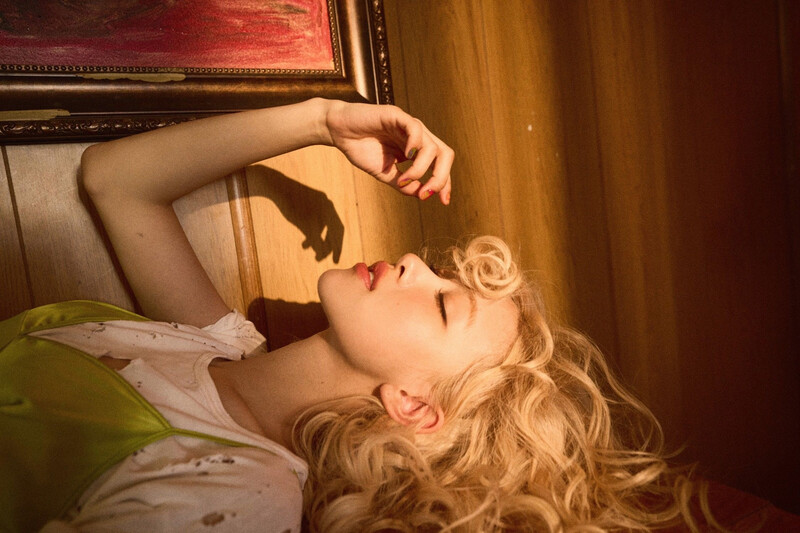
Yep, I’m talking about her blonde hair.
K-pop is all about mixing the East and the West. Half of K-pop lyrics are in English now. A huge proportion of K-pop idols grew up in the cultural West. And the West is such a huge market for K-pop companies. Keeping that blonde hair, as an ethnic Korean and New Zealand national, really makes Rosé embody that mix. She represents the hybrid culture modern K-pop has created. And by doing so, she can reach more people–undeniably, more people can look at her and see themselves in her look. More people can relate to her.
I’m not gonna lie–ever since rosie came out, I’ve honestly been playing the entire album on repeat. I don’t skip any songs; I don’t think I’ve ever been this enthusiastic about a K-pop album before. I gotta admit: some of her lyrics just really hit home for me right now. (The snarky “If loving you was a jump / Yeah I probably died a hundred ten times” is probably my favorite line from the album.)
But ignoring all my biases or musical preferences, I’d really like to see other K-pop artists take on a similar concept as Rosé. With all its overconfident concepts and insane beauty standards, it’s really no secret that K-pop struggles with authenticity. K-pop, as a whole, has always been in need of a dose of rosie-esque real honesty.
 ✦⋆˙ eighteen rants ⋆˙✦
Leave a comment